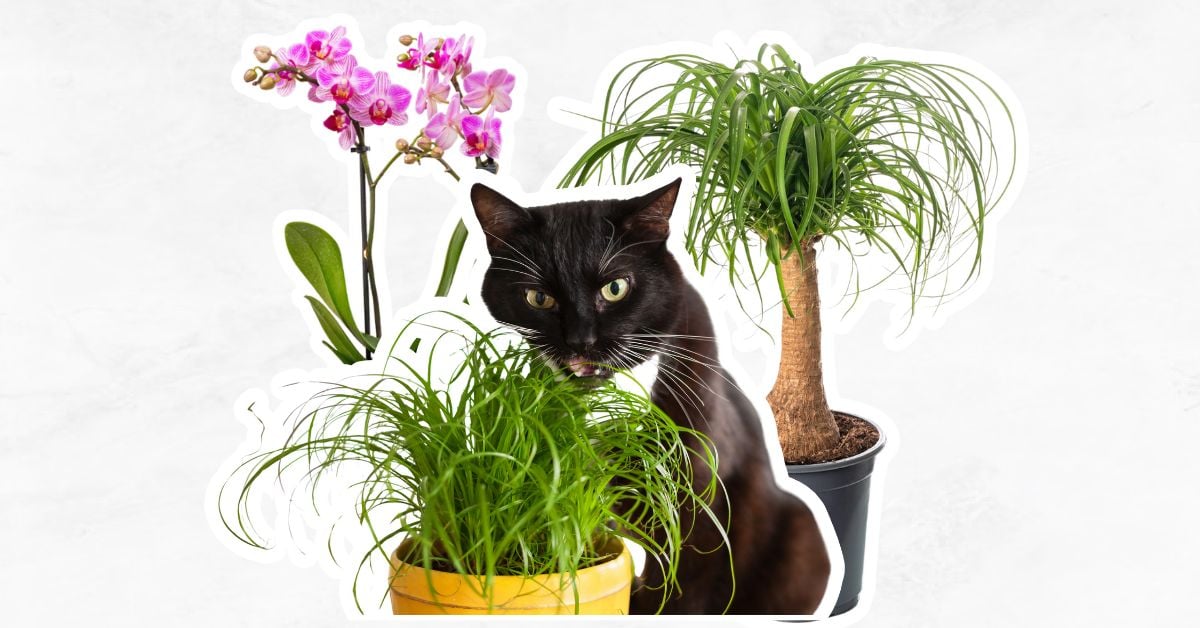
Because your plant collection shouldn’t put your fur babies at risk.
There’s nothing quite like a home filled with lush greenery.
It makes your space feel warmer, calmer, and just a bit more alive.
But if you share your home with pets (especially curious cats or adventurous dogs), choosing the wrong plant can turn your greenery dream into a veterinary emergency.
We’ve rounded up the most popular ASPCA‑approved non‑toxic houseplants — so you can enjoy greenery without worry.
Why Choosing Pet‑Safe Houseplants Matters
Before we look at specific plants, it’s important to understand why this is so crucial:
- Curiosity is real:
Cats especially love foliage — playing, biting, chewing, and batting leaves.
Dogs will nibble plants too, especially if bored or teething.
- Toxic plants are everywhere:
Many classic houseplants like pothos, peace lilies, snake plants, and monstera are toxic to pets.
They can trigger symptoms ranging from upset stomachs to severe organ issues.
Top Pet‑Safe Houseplants You’ll Love
Below you’ll find a curated list of plants that are ASPCA‑approved non‑toxic.
Included is a list of which pets they’re generally safe for (cats and dogs).
1) Spider Plant (Chlorophytum comosum)
Safe for: Cats & Dogs.
A household classic for good reason.
Spider plants are easy to care for, thrive in a range of light conditions, and help clean the air.
Their cascading leaves also look gorgeous in hanging baskets.
Pro tip: Cats sometimes love to chew spider plants — so place them high if your kitty is interested!
2) Parlor Palm (Chamaedorea elegans)
Safe for: Cats & Dogs.
Elegant and tropical‑looking, parlor palms bring a lush vibe without pet risk.
They do well in low to bright indirect light.
This makes them perfect for living rooms and bedrooms.
3) Boston Fern (Nephrolepis exaltata)
Safe for: Cats & Dogs.
This fluffy fern adds dramatic texture and a pop of green.
It prefers indirect light and consistent moisture.
It’s a great hanging or shelf plant.
4) Areca Palm (Dypsis lutescens)
Safe for: Cats & Dogs.
Also known as butterfly or golden cane palm.
The areca palm fills a corner with tropical flair and thrives in bright, indirect light.
Design tip: Pair it with a woven basket to add boho charm to living space corners.
5) Ponytail Palm (Beaucarnea recurvata)
Safe for: Cats & Dogs.
Despite its name, this is not a true palm — but it looks like one and brings architectural height.
It’s drought resistant, making it perfect for forgetful waterers.
Style tip: A tall ponytail palm can anchor a corner beside your reading nook or desk.
6) African Violet (Saintpaulia spp.)
Safe for: Cats & Dogs.
These petite plants bring bright color to indoor spaces and are popular for tabletops and shelves.
They love moderate light and consistent moisture.
7) Cast Iron Plant (Aspidistra elatior)
Safe for: Cats & Dogs.
Tough, low‑light tolerant, and forgiving of beginner missteps — this plant is basically indestructible.
Perfect for low‑traffic corners or spaces with fluctuating light.
8) Calathea & Prayer Plants (Calathea/ Maranta spp.)
Safe for: Cats & Dogs.
Also known as zebra plant or prayer plant.
These beauties have patterned leaves and close up at night, giving a “praying” look.
They love indirect light and slightly higher humidity.
Style tip: Their bold foliage makes them great accents for coffee tables or bedside stands.
9) Bromeliads
Safe for: Cats & Dogs.
These striking, tropical plants add dramatic flair and color to any room.
Many varieties are non‑toxic and pet‑friendly as per ASPCA lists.
Care tip: They love bright, indirect sun and occasional misting.
10) Orchids (e.g., Phalaenopsis)
Safe for: Cats & Dogs.
Elegant and classic, orchids give gorgeous blooms without pet risks.
They prefer bright, indirect light and well‑draining soil.
11) Succulents (e.g., Echeveria, Haworthia)
Safe for: Cats & Dogs.
Many popular succulents like echeveria and haworthia are considered non‑toxic.
It’s important to always double‑check specific varieties.
Design tip: Use them in sunny windowsills or grouped in small trays for modern minimalist style.
12) Swedish Ivy & Pilea
Safe for: Cats & Dogs.
Swedish ivy brings trailing vines perfect for shelves or hanging baskets.
Pilea (Chinese money plant) is adorable and low‑maintenance.
13) Moth Orchid (Phalaenopsisspp.)
Safe for: Cats & Dogs.
Elegant and classic, these orchids produce long-lasting blooms in shades of white, pink, and purple.
They thrive in bright, indirect light and well-draining soil.
Perfect for tabletops or window sills.
Care tip: Water once a week and let the soil dry slightly between watering.
14) Hens and Chicks (Sempervivumspp.)
Safe for: Cats & Dogs.
These low-growing succulents are easy to care for and perfect for small planters or terrariums.
Their rosette shape makes them visually appealing without taking up much space.
Care tip: Bright light is essential; allow soil to dry completely between waterings.
15) Friendship Plant (Pilea involucrata)
Safe for: Cats & Dogs.
Known for its textured leaves and compact size, the friendship plant thrives in medium light.
It adds a lush touch to shelves or desks.
Care tip: Keep soil lightly moist and avoid direct sunlight, which can scorch the leaves.
16) Lipstick Plant (Aeschynanthus radicans)
Safe for: Cats & Dogs.
Named for its vibrant red tubular flowers, this trailing plant is stunning in hanging baskets or high shelves.
It’s safe for both cats and dogs while bringing a pop of color indoors.
Care tip: Prefers bright, indirect light and regular watering, allowing soil to dry slightly between waterings.
17) Bamboo Palm (Chamaedorea seifrizii)
Safe for: Cats & Dogs.
This pet-safe palm adds tropical vibes and grows tall, making it perfect for corners or large living spaces.
It tolerates low light better than many other palms.
Care tip: Keep soil consistently moist but not soggy, and wipe leaves occasionally to remove dust.
🐾 Notes on Safety
Even though these plants are non‑toxic, there are a few things to remember:
- No plant is completely “edible.”: Even pet‑safe plants can cause upset tummies if eaten in large amounts.
- Placement matters: Use hanging baskets, shelves, or stands to keep greenery out of reach of overly curious pets.
- Plants aren’t toys: Some pets enjoy chewing or playing with plants — keep a close eye on behavior.
- Different species, different rules: Some plants have toxic relatives — always double‑check the exact scientific name via the ASPCA database before buying.
Leave a Reply